
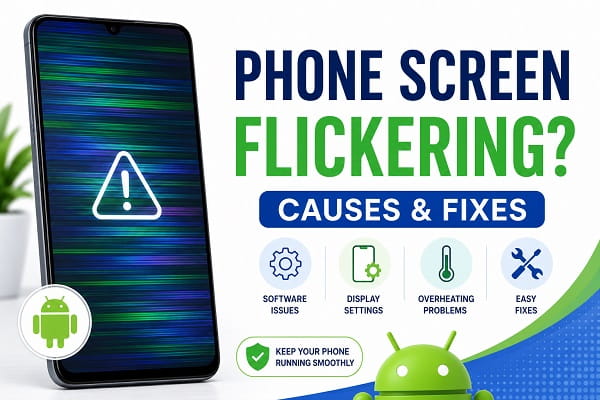
A flickering phone screen can be frustrating and sometimes even alarming. One moment your Android phone is working normally, and the next the display starts flashing, blinking, flickering, or showing strange green lines. In some cases, the problem only appears when brightness is reduced. In others, the screen may constantly flicker, making it difficult to use the device.
Many users immediately assume their phone has suffered hardware damage and needs an expensive repair. While that is sometimes true, screen flickering is often caused by software issues, display settings, app conflicts, or temporary system glitches that can be fixed without replacing the screen.
Whether you use a Samsung Galaxy, Google Pixel, Xiaomi, Tecno, Infinix, Oppo, Vivo, Motorola, or another Android device, this guide explains the most common causes of screen flickering and the best ways to fix the problem.
Why Is My Phone Screen Flickering?
Display issues often occur alongside other touchscreen and responsiveness problems. If your screen has become difficult to use or is failing to respond properly, read our guide on Android touchscreen not working for additional troubleshooting tips.
Screen flickering can happen for several reasons.
Common causes include:
- Software bugs
- App conflicts
- Display setting issues
- Adaptive brightness problems
- System update errors
- Overheating
- Physical screen damage
- Faulty display hardware
Identifying the cause is the first step toward finding the correct solution.
Restart Your Phone
Temporary software glitches that cause screen flickering can also trigger unexpected reboots. If your device frequently restarts on its own, check out our guide on Android keeps restarting.
A simple restart should always be your first troubleshooting step.
Temporary software glitches can interfere with display functions and cause unusual screen behavior.
To restart your phone:
- Press and hold the Power button.
- Select Restart.
- Wait for the phone to reboot.
After restarting, monitor the display for a few minutes to see if the flickering returns.
Check Whether a Recently Installed App Is Causing the Problem
Some apps can become unstable after major Android updates and may affect display performance. If you’ve noticed applications crashing frequently, see our guide on apps keep crashing after Android update.
Some apps can conflict with Android’s display system.
This is especially common with:
- Screen dimming apps
- Display filter applications
- Third-party launchers
- Gaming enhancement tools
If the flickering started shortly after installing a new app, try uninstalling it.
After removing the app, restart your phone and check whether the issue has been resolved.
Disable Adaptive Brightness
Adaptive Brightness automatically adjusts screen brightness based on surrounding light conditions.
While useful, it can sometimes cause display instability on certain devices.
To disable it:
- Open Settings.
- Tap Display.
- Select Adaptive Brightness.
- Turn the feature off.
Use the phone normally for a while and observe whether the flickering stops.
Check Screen Brightness Settings
Some Android devices experience flickering when brightness levels are set extremely low.
Try increasing brightness manually.
If the problem disappears, the issue may be related to display calibration or adaptive brightness behavior.
This is particularly common on OLED displays.
Update Android Software
Software updates frequently include fixes for display-related bugs.
To update Android:
- Open Settings.
- Tap System.
- Select Software Update.
- Install any available updates.
After updating, restart the phone and test the display again.
Start the Phone in Safe Mode
Safe Mode is one of Android’s most useful diagnostic tools because it helps identify software conflicts. If you’re unfamiliar with how Safe Mode works, you may also find our guide on Android stuck in Safe Mode helpful.
Safe Mode temporarily disables third-party applications.
This helps determine whether an installed app is causing the problem.
To enter Safe Mode:
- Press and hold the Power button.
- Touch and hold Power Off.
- Select Safe Mode.
If the flickering disappears in Safe Mode, a third-party application is likely responsible.
You can then uninstall recently added apps one by one until the problem is resolved.
Check for Overheating
Excessive heat can affect more than just the display. It may also slow down performance, reduce battery life, and cause charging problems. Learn more in our guide on phone overheating while charging.
Excessive heat can affect display performance.
Phones often become hot when:
- Gaming for long periods
- Fast charging
- Running demanding applications
- Operating in direct sunlight
Allow the device to cool down and see whether the flickering improves.
Avoid using heavy applications while charging if overheating occurs frequently.
Remove Any Screen Protector
Poor-quality screen protectors can sometimes create the illusion of flickering.
Although less common, damaged or improperly installed protectors may interfere with visibility.
Temporarily remove the protector and test the display again.
Reset Display Settings
Incorrect display configurations can occasionally cause visual problems.
Try restoring default display settings.
Check options related to:
- Refresh rate
- Color mode
- Display scaling
- Eye comfort mode
Returning these settings to their default values can help eliminate software-related display issues.
Reset Network and System Settings
While resetting settings can fix display-related software issues, it is also a common solution for wireless connection problems. If your phone struggles to stay connected online, check out phone keeps disconnecting from WiFi.
Corrupted system configurations may sometimes contribute to unusual screen behavior.
Resetting settings restores default system configurations without necessarily deleting personal files.
To do this:
- Open Settings.
- Tap System.
- Select Reset Options.
- Choose the appropriate reset option.
Afterward, restart your device and test the display.
Why Is My Phone Screen Flickering After an Update?
Many users report display problems after installing Android updates.
Possible causes include:
- Software bugs
- App compatibility issues
- Corrupted update files
- Display driver conflicts
If the issue started immediately after an update, check for additional updates because manufacturers often release bug-fix patches shortly afterward.
Why Is My Phone Screen Turning Green and Flickering?
Green screen flickering can sometimes occur alongside other display abnormalities caused by software bugs or hardware damage. If your phone has recently become difficult to operate, see our guide on how to speed up a slow Android phone for additional optimization steps.
Green flickering is commonly associated with OLED displays.
Possible causes include:
- Software glitches
- Refresh rate issues
- Hardware damage
- Display panel defects
If the problem persists after trying software fixes, professional diagnosis may be necessary.
When Screen Flickering Indicates Hardware Damage
Software-related flickering can often be fixed at home.
However, hardware damage becomes more likely if:
- The phone was dropped recently.
- The screen has visible cracks.
- Water damage occurred.
- Flickering continues after a factory reset.
- Green or purple lines appear permanently.
In these situations, screen replacement may be required.
How to Prevent Screen Flickering Problems
To reduce the chances of future display issues:
- Keep Android updated.
- Avoid overheating.
- Install apps from trusted sources.
- Use quality screen protectors.
- Avoid physical impacts.
- Restart your device periodically.
These habits help maintain both software stability and hardware health.
Many Android problems can appear serious at first but are often caused by minor software issues. Exploring useful system features and maintenance practices can help prevent future problems. Don’t miss our collection of hidden Android features that can improve your device experience.
Should You Be Worried About a Flickering Phone Screen?
Not necessarily.
In many cases, screen flickering is caused by temporary software issues, brightness settings, app conflicts, or minor system glitches that can be fixed without professional repairs. However, if the problem continues after trying the solutions in this guide, especially when accompanied by green lines, discoloration, or physical damage, the display hardware may require inspection.
By troubleshooting the issue methodically, you can often identify the cause and restore your phone’s display to normal operation.
